Monday, 14 June 2010

What The World Cup Can Teach Us About Fat Loss!


With the World Cup on at the minute, I thought that i would share a study with you showing the effect of football (soccer) for fat loss.

Recreational soccer is an effective health-promoting activity for untrained men
Krustrup et al.
British Journal of Sports Medicine 2009;43:825-831

36 healthy untrained men were randomised into a soccer group, a running group and a control group.

Training was performed for 1 hour two or three times per week for 12 weeks; at an average heart rate of 82% of HRmax for both training groups.

During the 12 week program, the soccer group improved maximal oxygen uptake (a measure of aerobic fitness) 62% more than the running group. The soccer group also lost an average of 50% more fat than the running group (6lbs vs 4lbs)

The soccer group had an increase in lean body mass of 3.75lbs, an increase in lower
extremity bone mass, a greater decrease in LDL-cholesterol and an increase in fat oxidation
during running at 9.5 km/h. The running group saw none of these changes.

The number of capillaries per muscle fibre was also almost 50% higher in the soccer training group than in running. Both groups reduced blood pressure equally.

The researchers concluded that participation in recreational soccer training, has significant beneficial effects on health profile and physical capacity and in some aspects it is superior
to frequent moderate-intensity running.


Why Is This?

I think there are many reasons why football is an effective medium for fat loss.

First off i think it is because it is fun for the participants, it gives them something to think about instead of just running.

Second, it is interval training as you are sprinting, stopping, jogging and as we know intervals are far superior to steady state running for fat loss.

Thirdly, you will probably work harder during a game and want to go to the game, than you would if you had to go for a run.

Lastly there is a social aspect to a team sport, having to be there for the game gives the accountability factor of not letting your team mates down.

Monday, 24 May 2010

Should I Eat The Yolk? By Jamie Hale Book Review Part 2


As promised in part 1 i'm back with another teaser from the book by Jamie Hale "Should I eat the yolk?" which is an excellent book, giving facts about the most common question asked about nutrition and fitness.

In part 1 i gave you 2 training related questions from the book and the answers, in this part i will give you a nutritional example.


Can I eat late in the evening if i am trying to lose weight?

Answer: Every diet i have ever designed includes a late evening meal; many times it is the biggest meal of the day. If the late evening meal stays within the calorie budget, it will not affect weight loss.

Formulas designed for detertmining daily calorie maintenance levels are based on calorie expenditure while resting (resting energy expenditure), calorie expenditure required for digestion (thermic effect of feeding), and calorie expenditure due to activity (thermic effect of activity). What time of the day you eat has minimal impact on caloric expediture.

Investigation: This myth about restricting food late in the day - which was popular whan i was a child - is resurfacing. Some consider eating late as eating past 6 pm; others 7 pm, or 8 pm, as their marker. Regardless of their definition of late, proponents of this claim generally give the same reasons for not eating in the evening: you are likely to be less active at night and insulin sensitivity is lowest at night. Neither of these reasons is sufficient to support the claim. Many people train late in the evening; post-training, insulin sensitivity is increased. John Ivy, PhD, and Robert Portman, PhD, say that "immediately after exercise, muscle cells are extremely sensitive to the anabolic effects of the hormone insulin."


I hope you have got some insight out of these 2 posts, but the book has many many more and is well worth the read.

Here's the link to the book an amazon http://www.amazon.co.uk/Should-Eat-Yolk-Jamie-Hale/dp/1569757909

Sunday, 23 May 2010

Should I Eat The Yolk? By Jamie Hale Book Review Part 1


Do i really need to drink 8 glasses of water a day?

Should i eat only low glycemic index carbohydrates when trying to lose weight?

Will heavy weight training make me bulky?

Should i eat the yolk?

These are just a few of the questions that as a trainer we get asked all the time.

Well my colleague Jaime Hale has just released his new book "Should i eat the yolk?" which answers a lot of the most popular questions asked with research data backing up his answer. The concept of this book is EXCELLENT as i feel there is a lot of info out there, these days in book and the internet but it's not really backed up with data supporting there claims. This is were people get confused (including myself at times) and this is were i feel that Jaime's book is excellent as it gives you facts and answers about your questions and i highly recommend that you pick up a copy.

I would like to say that i don't make any money off the book. I just feel that the info in the book is excellent that any one from trainers to trainees will benefit from the info in the book.

Here's a link to the book on AMAZON http://www.amazon.co.uk/Should-Eat-Yolk-Jamie-Hale/dp/1569757909

The book is divided into training questions, nutrition questions and finding the right diet for weight loss. Below you will find an exert from the book, of the many training question answered, it was really hard to pick these out as there is so much info in this book and i will be back in the next post with some of the nutritional questions to wet your appetite.


Will performing sit-ups shrink my waistline?


Answer: Sit-ups do NOT shrink the waistline. To shrink the waistline, you need to drop body fat. Sit-ups should be included in a comprehensive fitness program, but the idea that they somehow decrease the size of the waist is a fairy tale.

Investigation: Slimming the stomach and trimming the waistline are probably the most discussed topics in the fitness industry. Tummy-shrinking infomercials fill late-night tv slots, and magazines are filled with superab ads. What's the deal? Do sit-ups, in fact, shrink the waistline?

According to Alan Aragon, nutrition researcher and author of girth control, this is a myth. In addition to exercise, calories need to be burned. "It's not sit-ups per se that shrink the waistline, it's whether or not you're losing body fat by remaining in anet calorie deficit over a period of weeks and months. Training a muscle doesn't automatically disintegrate the fat surrounding it," Aragon said in a recent conversation via e-mail.


Will my muscle turn to fat if i stop weight training?


Answer: Muscle does not turn to fat. If you stop working out, you will probably lose a fair amount of muscle and possibly gain a fair amount of fat.

Investigation: Muscle and fat are different types of tissue. They are not interconvertible. If you stop training, you no longer have the appropriate stimuli to promote muscle gains. If you continue to eat the same as you did wehen training, your caloric intake will surpass your daily maintenence calorie requirementsm - resulting fat gain. Even under these conditions, some of the calories will be allocated to muscle. genetics play a large role in how much weight gain contributes to fat tissue and how much it contributes to muscle tissue.


These are just a few of the many questioned answered in the book and if you have any questions on training and nutrition it is definitely worth picking up copy.
http://www.amazon.co.uk/Should-Eat-Yolk-Jamie-Hale/dp/1569757909

Sunday, 25 April 2010

The Big Rock Concepts For Training!


In part 1 we talked about the Big Rock concepts for nutrition, in this part we put the same thoery into training, showing you the main things or rocks that should be in your training program for fat loss success. So, lets get started.

1. Full Body Workouts!

Full body workouts will yield a greater energy expenditure per workout when compared to split routines because of the large amount of muscle mass being taxed in each session.

In 2000, a study came out in the Journal of Strength and Conditioning Research that compared training just one day a week versus three days (with the same total volume).

The subjects were randomly assigned to one of two groups: one day per week of three sets to failure, or three days per week of one set to failure.

The study concluded that the one day group only achieved 62% of the one rep max (1RM) increases observed in the three day group, in both upper-body and lower-body lifts.

Larger increases in lean body mass were apparent in the three day group as well. The findings suggest that a higher frequency of resistance training, even when volume is held constant, produces superior gains in lean body mass and 1RM.

So regardless of your routine, frequency is a key factor for optimal progress.


2. Use Compound Exercises!

What Are Compound Exercises?

Today's fitness programs tend to focus on functional fitness, which refers to exercise that simulates real-life activities and uses a wide variety of movements through a wide range of motion. At the heart of these routines are a variety of compound exercises. Compound exercises are multi-joint movements that work several muscles or muscle groups at one time. Examples would be Squats, Lunges, Deadlifts, Step-ups, Press-ups and chin-ups to mention a few.

Why Use Compound Exercises?

There are many reasons to use compound exercises during your workout, including the following:

Using more muscle groups. . .

  • means more calories burned during exercise.
  • simulates real-world exercises and activities.
  • allows you to get a full body workout faster.
  • improves coordination, reaction time and balance.
  • improves joint stability and improves muscle balance across a joint.
  • decreases the risk of injury during sports.
  • keeps your heart rate up and provides cardiovascular benefits.

3. Interval Type work!

The landmark study in interval training was from Tremblay:

Tremblay A, Simoneau JA, Bouchard C.

Impact of exercise intensity on body fatness and skeletal muscle metabolism.
Metabolism. 1994 Jul;43(7):814-8

This study pitted 20 weeks of endurance training against 15 weeks of interval training:

Energy cost of endurance training = 28661 calories.
Energy cost of interval training = 13614 calories (less than half)

The interval training group showed a nine times greater loss in subcutaneous fat than the endurance group (when corrected for energy cost).

Read that again. Calorie for calorie, the interval training group lost nine times more fat overall. Why? Maybe it’s EPOC, an upregulation of fat burning enzyme activity, or straight up G-Flux. If the interval training group had lost the same fat as the endurance group, we’d get the same results in less time. That means interval training is a better tool in your fat loss arsenal.


4. Consistency!


I think this speaks for itself as the more raining you do over a month or year the better the results will be. A good why to be more consistant with your training is to get a training partner or personal trainer as this makes you more accountable to turn up and train.

Supervised exercise versus non-supervised exercise for reducing weight in obese adults.
Nicolaï SP et al
J Sports Med Phys Fitness. 2009 Mar;49(1):85-90.

Two groups – Group one met a trainer twice a week for 4 months (as a group).
Group two received basic advice to increase physical activity and access to a fully equipped gym (any exercise they did was unsupervised).

The group with supervision lost on average 362% more fat over a 4-month period. (Total fat loss of 13.4lbs in the coached group – and only 3.7lbs in the advice only group)

Interesting side note -they made these improvements without ANY dietary advice given.

Another study came out a few years ago showing that a participant would exercise 30% harder or more (can’t remember the exact number) with someone just watching them (i.e. not offering any instruction or encouragement). You can imagine how that could translate into much greater results, when added with a good program, great coaching, great social support and great instruction.

In Conclusion!

Make sure you have the big rock principles from these 2 articles in your training and nutrition program and you will big changes in your shape. Then if your progress stalls this is the time to add the small rock concepts of training and nutrition. So, if you aren't doing the big rock principles first then start implimenting them and see the changes.

Friday, 9 April 2010

The Big Rocks Concept For Nutrition!


There are so many theory's/ concept's out there about nutrition i hear you say, so why would we need another one. Well this concept is a bit different than most, so stick with me on this one as it will all become clear.

Stephen Covey tells a story that one of his associates heard at a seminar. The seminar presenter pulled out a wide-mouth gallon jar and placed it next to a pile of fist-sized rocks. After filling the jar to the top with rocks, he asked, "Is the jar full?"

The group replied, "Yes."

He then got some gravel from under the table and added it to the jar. The speaker jiggled the jar until the gravel filled the spaces between the rocks. Again, he asked, "Is the jar full?"

This time, the group replied, "Probably not."

The speaker then added some sand and asked, "Is the jar full?"

"No!" shouted the group.

Finally, the speaker filled the jar to the brim with water and asked the group the point of this illustration.

Someone replied that you could always fit more things into your life if "you really work at it."

"No," countered the speaker. The point is, if you don't put the big rocks in first, " . . . would you ever have gotten any of them in?"


So, how does this apply to nutrition?

Well i believe there are 5 Big Rocks in nutrition for fat loss that need to be address before you would start looking at any other nutritional strategies for loss fat.


1. Never Skip BreakFast!

What's for breakfast - coffee? Most mornings, we barely glance at the kitchen. Fixing breakfast takes up precious time that's in short supply. But there's ample evidence that the simple act of eating breakfast -- every day -- is a big part of losing weight, lots of weight.

"People skip breakfast thinking they're cutting calories, but by mid-morning and lunch, that person is starved," says Milton Stokes, RD, MPH, chief dietitian for St. Barnabas Hospital in New York City. "Breakfast skippers replace calories during the day with mindless nibbling, bingeing at lunch and dinner. They set themselves up for failure."

The Benefits of Breakfast

Eating breakfast is a daily habit for the "successful losers" who belong to The National Weight Control Registry. These people have maintained a 30-pound (or more) weight loss for at least a year, and some as long as six years.

"Most -- 78% -- reported eating breakfast every day, and almost 90% reported eating breakfast at least five days a week - which suggests that starting the day with breakfast is an important strategy to lose weight and keep it off," says James O. Hill, PhD, the Registry's co-founder and director of the Center for Human Nutrition at the University of Colorado Health Sciences Center.

Eating early in the day keeps us from "starvation eating" later on. But it also jump-starts your metabolism, says Elisabetta Politi, RD, MPH, nutrition manager for the Duke Diet & Fitness Center at Duke University Medical School. "When you don't eat breakfast, you're actually fasting for 15 to 20 hours, so you're not producing the enzymes needed to metabolize fat to lose weight."


2. Portion Control!

Calorie balance is still the one and only way to lose weight, calorie balance being the equation of calories in versus calories out. So to make sure you are holding firm to this rule you have to watch how much you are eating. One way of accomplishing this is portion control, and a good way of achieving this is the HAND portion control system.


HAND portion control works by placing your 2 hands together side by side and this respresents your plate. Now we divide up into different food choices. The size of one palm of your hand should be the size of your Protein portion. The whole of the other hand should represent the amount of fibrous vegetables, and the fingers of the other hand should represent the amount of low GI carbohydrate sources.


3. Multiple Meals Per Day!

A major benefit of multiple meals per day is it's ability to control blood sugar levels. The traditional "3 square meals per day" causes 3 large injections of carbohydrates (sugars) into your body. These carbohydrate injection cause spikes in blood sugar levels. This is disruptive for your body, which likes to maintain a steady blood sugar level. In an attempt to bring blood sugar levels back to normal the body secretes the hormone insulin.

Your body, eager to bring blood sugar levels down, can get overzealous and release too much insulin, resulting in very low blood sugar levels. Low blood sugar levels, or hypoglycemia (hypo = low, glycemia = sugar), can leave you feeling tired, shaky, or light headed. This fluctuation of blood sugar levels is not the optimal situation for muscle growth or fat loss. Spreading your meals throughout the day and eating more often helps prevent this blood sugar roller-coaster.


4. Protein With Every Meal!

High-protein diets have become a popular way to lose weight because emerging research has hinted that protein may be able to satisfy hunger better than either fats or carbohydrates.

What Studies Show

Participants in a study published in the American Journal of Clinical Nutrition reported greater satisfaction, less hunger, and weight loss when fat was reduced to 20% of the total calories in their diets, protein was increased to 30%, and carbs accounted for 50%. The study participants ate some 441 fewer calories a day when they followed this high-protein diet and regulated their own calorie intake.

Another study, reported in the Journal of Nutrition, showed that a high-protein diet combined with exercise enhanced weight and fat loss and improved blood fat levels. Researchers suggest that higher-protein diets help people better control their appetites and calorie intake.

Diets higher in protein and moderate in carbs, along with a lifestyle of regular exercise are often purported by experts to reduce blood fats and maintain lean tissue while burning fat for fuel without dieters being sidetracked with constant hunger.


5. Know Your Carbohydrates!

Carbohydrates can be both good and bad for your health. There is a big difference between the various types of carbohydrates that we consume. It is always good to know which carbohydrate sources could benefit us instead of make us unhealthy.

Are Carbohydrates Good or Bad?

Carbohydrates have been the subject of dispute in the past ten years. Carbs have been considered a ‘no-no’ in may fad diets and some have been recognized as healthy nutrients that lower risks for chronic diseases.

What is the verdict then? Are carbs beneficial or disadvantageous? The truth is, carbs are both good and bad, and it is fortunate that it is actually very easy to tell the difference.

  • Good carbs like the ones that are fiber rich have many health benefits. These prevent sudden rises in blood sugar levels because they are slowly absorbed in our systems. Good carbs from fiber-rich foods can be found in whole grains, vegetables, fruits, and beans.
  • Bad carbs have beneficial fiber stripped away from carbohydrates like white bread and white rice. Eating less of these products can dramatically reduce the health risks posed by bad carbs.
Managing your carbohydrate intake doesn't have to be complicated, if you want to keep it simple, keep your carbs complex (fiber-rich), and just cut out the candy, skip the soda and pass on the processed pastry.


In Conclusion!

Make sure you have the Big Rocks (fundamentals) in your diet set before trying to implement any other strategies for losing fat. Remember the fundamentals are the building blocks for success. If these are in place the other strategies will work better.


Sunday, 28 March 2010

3 Breakthough's Needed To Change Your Shape!

In the video below my mentor Rachel Cosgrove makes a great presentation to a group of females about the 3 breakthrough's needed to change your shape. Rachel was doing this talk as a tour for her great book The Female Body Breakthrough.


Rachel makes 3 points that need to be in balance for you to reach the shape you are after, Mindset (having a goal), Exercise (resistance training) and Nutrition (sensible eating and lifestyle changes).

If you have these 3 breakthrough's in balance you will not only change your shape but also keep these changes for good!

Monday, 15 March 2010

Normal Weight, Yet Still Obese?

The below video appeared on Good Morning America in January, its about the Skinny Fat syndrome which is very interesting.

http://abcnews.go.com/video/playerIndex?id=9674189

As you can see in the video what most people are doing wrong is focusing on the scales and not on how they fit into there clothes or look in the mirror.

Fat Or Muscle?

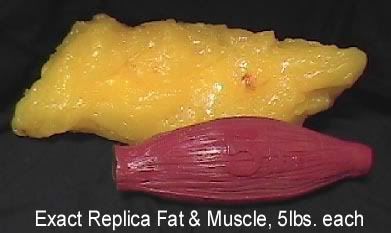
Lets put it another way, would you like 5lbs of muscle or 5lbs of fat on your body, they both weight the same so on the scales you would still be the same weight. But would you look the same?


As you can see in the image above the 5lbs of fat (in yellow) would take up more room in your body frame compared to the 5lbs of muscle, making you look slimmer even though you still weighed the same weight.

The Common Mistake?

Most people believe that hitting the cardio trail (walking, running, cycling, etc) is the way to the new you. Yes, you might lose weight to start with because of the increase in activity if you haven't done any exercise of late, but as you can see in a previous post i made Acceptable in the 80's part 1 the research isn't behind steady state cardio for fat loss.

As Monica said in the video the KEY to losing fat and completely changing your shape permanently is resistance training.

Resistance training helps you to build lean muscle tissue, which in turn helps to speed up you metabolic rate. Over the years your metabolic rate slows down as you loss lean muscle tissue and causes you to put on weight and fat. This is one reason to give resistance training a go if you don't already.

Another reason to give resistance training a go and keep off the fat, is for health benefits. As it mentioned in the video the areas that you hold your body fat can be very dangerous to health. The belly region in men and women can be very dangerous to health with causes being heart disease, stroke, type 2 diabetes, high blood pressure, to name a few.

In Conclusion

STOP focusing on the scales and start focusing on your shape, add the resitance training to your program and see the changes, and even better than that take pictures over the week and see your shape change and feel better in your clothes.